

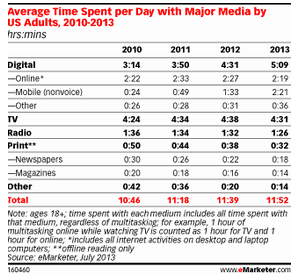
Television commercials, billboards, and magazine ads are the “must haves” when advertising traditional products. They have been around for years and will continue to be a staple in most companies’ advertising budgets. This fact, however, does not seem to apply for mobile game developers. Mobile games are anything but traditional and mobile game developers looking to acquire users have, until now, mostly stuck to advertising on mobile devices. Even though digital advertising is estimated to reach $47.8 billion in 2014, TV advertising will also keep on increasing up to $68.54 billion, with no sign of slowing down anytime soon.Times are changing: both traditional and mobile companies are starting to embrace the second screen.
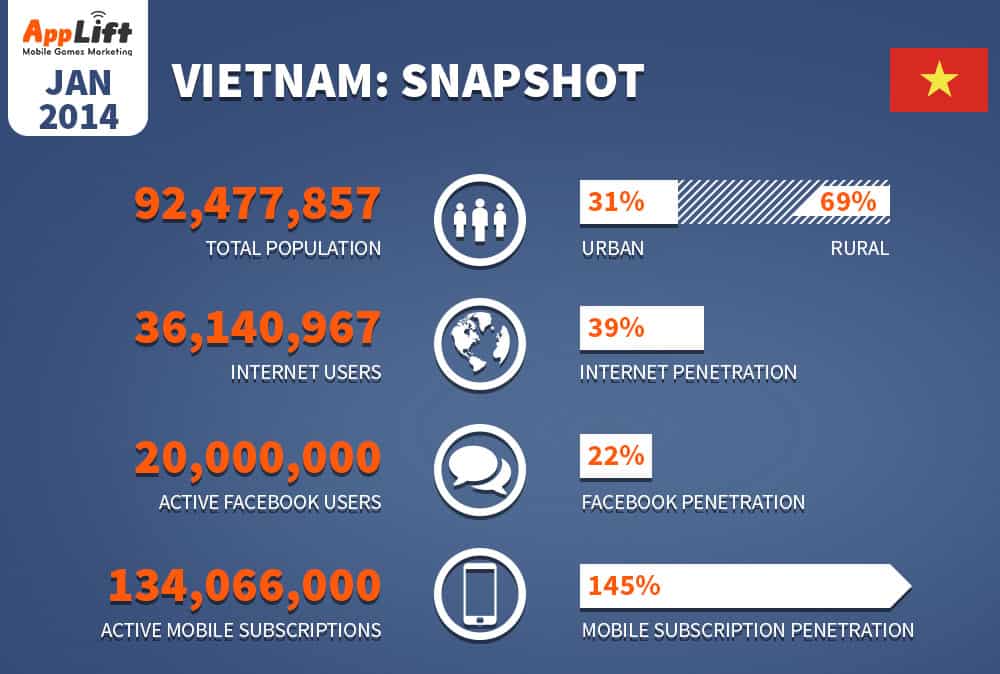
Welcome to the fifth instalment of our Asian Beat series! Having dived into South Korea (twice), made it big in Japan and scrutinized the behemoth Chinese market, we now move on to a smaller but extremely promising country: Vietnam. For this specific post we benefit from the insights of Anh Hoang Duc, analyst at Dynamo Partners and native of Hanoi.A couple of months ago Flappy Bird, an app developed by Dong Nguyen, a Vietnamese developer, roared out of the gates like no app before, leaving behind a mobile games industry flabbergasted by its sudden success. Flappy Bird put the Vietnamese mobile games market in the spotlight in the global developer community, and yet many of the country’s facts and figures are still not widely covered. This post aims at shedding some light on the Vietnamese mobile games market, which has many of the characteristics needed for mobile success: a young population who have grown up with smartphones and tablets as their primary internet touchpoint, widely spread internet penetration, and the booming number of smartphones.

As the saying goes: “A picture is worth a thousand words”. How about a motion picture then? There is no doubt about the fact that video ads are currently one of the most compelling way to advertise your mobile game (or app for that matter). Video is a strong medium because it enables you to convey a lot of emotions in short period of time. The truth is, however, that when talking of video ads for mobile user acquisition today most people think of in-app video clips.


Once again, we are keeping you up to date with the latest news at AppLift as well as a round up of issues affecting the wider mobile industry.

Effective retention strategies are the key to successful mobile game monetization. Creating a game, and marketing strategy, which hooks users in and keeps them returning results in good player retention levels and more revenue.
At AppLift, we take the data privacy of the visitors to our website very seriously.For this reason we have applied to, and received TRUSTe’s Privacy Certification for the property AppLift.com. This means that our Privacy Policy as well as the entirety of our website practices have been reviewed for compliance with the TRUSTe website certification program.

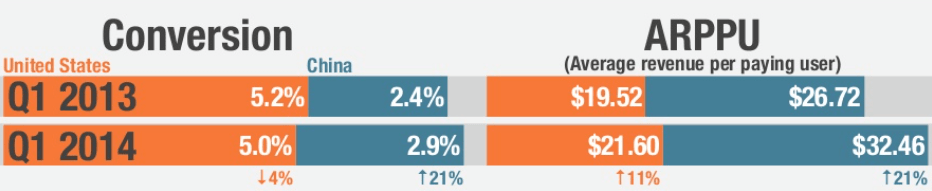
Welcome to Asian Beat #4! Having talked about winning moves in South Korea and cracking Japan, we now move to the Chinese mobile games market.It’s no secret that the China is emerging as one of the most important mobile games markets this year. The forecasted figure for the number of Chinese mobile gamers in 2014 is 288 million, and this is predicted to rise to 770 million by 2018. China is hot on North America’s heels; according to a SuperData Research report from May of this year, the Chinese mobile games market is set to overtake the US and Japan to become the largest mobile games market in the world in 2015.


App reviews, ratings, referrals, social media endorsements and shares are all beneficial to highlighting the quality of your app or game to potential users browsing the app stores. But just how influential are app reviews, Facebook Likes and the like on click-to-install conversion rates and how can you encourage your players to review and Like your app or mobile game?